Snow is a normal part of winter across eastern Nebraska and southwest Iowa, but problems often begin when temperatures move above and below freezing.
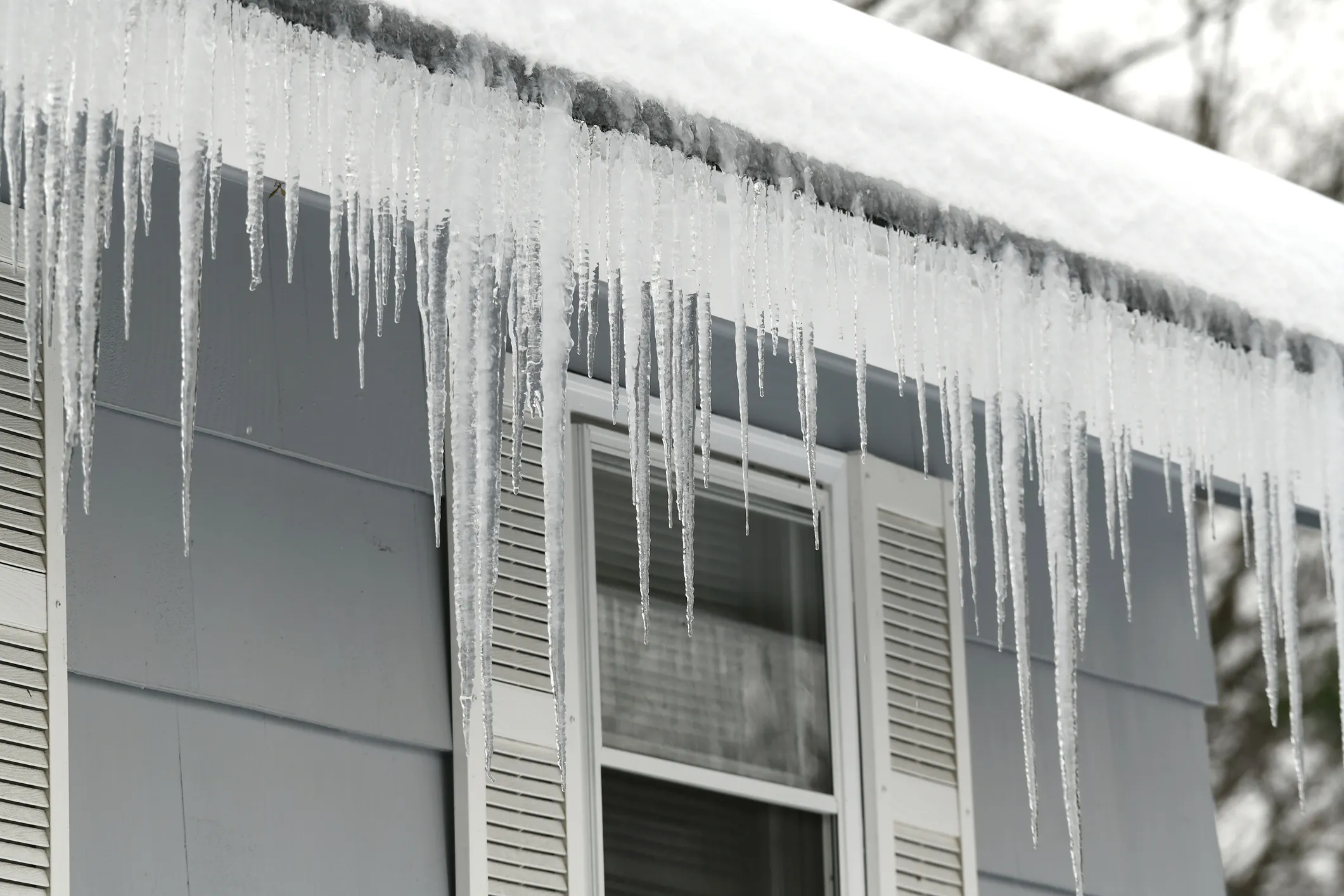
Ice dams are ridges of ice that develop along the roof edge and prevent melting snow from draining properly.
What Is an Ice Dam?
An ice dam forms when snow on the upper roof melts, flows toward the colder eaves, and refreezes.
As the ridge grows, additional water becomes trapped behind it. Instead of draining into the gutters, water may back up beneath roofing materials and enter the home.
Why Do Ice Dams Form?
Ice dams are often caused by heat escaping from the home into the attic.
Warm air raises the temperature of the roof deck enough to melt snow. The water then reaches colder roof edges and freezes again.
Common contributors include:
- Inadequate attic insulation
- Poor roof ventilation
- Air leaks into the attic
- Heavy snowfall followed by freezing temperatures
Signs You May Have an Ice Dam
Warning signs include:
- Thick ice along the roof edge
- Large icicles hanging from gutters
- Water stains on ceilings or walls
- Wet attic insulation
- Dripping during warmer winter days
- Ice buildup around valleys or gutters
Can Ice Dams Damage Your Roof?
Yes. Trapped water can contribute to:
- Roof leaks
- Damaged shingles
- Wet roof decking
- Mold and mildew
- Damaged insulation
- Interior ceiling and drywall damage
- Gutter damage from heavy ice
Preventing Ice Dams Starts in the Attic
Long-term prevention often involves improving attic performance.
Add Adequate Insulation
Insulation reduces heat loss into the attic and helps keep the roof surface closer to outdoor temperature.
Improve Roof Ventilation
Ventilation allows excess heat and moisture to escape.
Seal Air Leaks
Warm air can escape through attic hatches, light fixtures, plumbing penetrations, and other openings.
Should You Remove an Ice Dam Yourself?
Small amounts of snow may sometimes be removed from the ground with a roof rake.
Do not climb onto an icy roof or use metal tools, harsh salt products, open flames, or pressure washers.
Significant ice buildup or active leakage should be handled professionally.
Frequently Asked Questions
Do all homes get ice dams?
No. Homes with good insulation, ventilation, and air sealing are generally less likely to experience severe ice dams.
Are large icicles always a sign of an ice dam?
Not always, but they may indicate repeated melting and refreezing near the roof edge.
Can ice dams cause roof leaks?
Yes. Trapped water can work beneath shingles and into the roof structure.
What is the best long-term solution?
Address insulation, ventilation, and air leakage rather than only removing ice after it forms.
Protect Your Roof Before Winter Problems Grow
Thompson & Thompson can inspect the roofing and attic systems, identify contributing conditions, and recommend practical steps to reduce future winter damage.