Many homeowners do not think about their attic until there is a problem. But the insulation above your ceiling plays a major role in keeping your home comfortable throughout the year.
When insulation settles, becomes damaged, or was never installed in sufficient amounts, your heating and cooling system has to work harder. Over time, that can affect comfort, increase energy costs, and place additional strain on your roofing system.
1. Some Rooms Never Feel Comfortable
Do you have an upstairs bedroom that is always warmer than the rest of the house during summer? Or a room that feels chilly all winter, no matter how high you turn up the thermostat?
Uneven temperatures are often one of the first signs that your attic is not performing as it should. Without adequate insulation, outdoor temperatures transfer through the roof more easily.
2. Your Energy Bills Keep Increasing
When conditioned air escapes through the attic—or outdoor temperatures easily enter the home—your HVAC system must run longer to maintain the temperature you want.
If utility bills have increased without a major change in your household, attic insulation may be worth evaluating.
3. Your Home Feels Drafty
Drafts are not always caused by windows and doors. Poor attic insulation can contribute to noticeable temperature changes throughout your home, especially during Nebraska’s cold winters and hot summers.
4. Your Roof Has Experienced Storm Damage or Replacement
Whenever a roof is replaced or major storm damage is repaired, it is a good opportunity to evaluate the attic.
A roofing project can make it easier to identify insulation that is compressed, wet, damaged, or no longer performing as intended.
5. Your Home Is Older
Building codes and recommended insulation levels have changed over time. Many older homes simply do not have enough attic insulation to meet modern expectations.
Adding blown-in insulation can often improve coverage without requiring major renovation.
Insulation and Ventilation Work Together
Adding more insulation does not automatically solve every comfort problem. Your attic functions as a system.
Insulation helps slow heat transfer, while proper roof ventilation allows excess heat and moisture to escape. When they work together, they can improve comfort, help protect roofing materials, and reduce unnecessary strain on the HVAC system.
Is Blown-In Insulation the Right Choice?
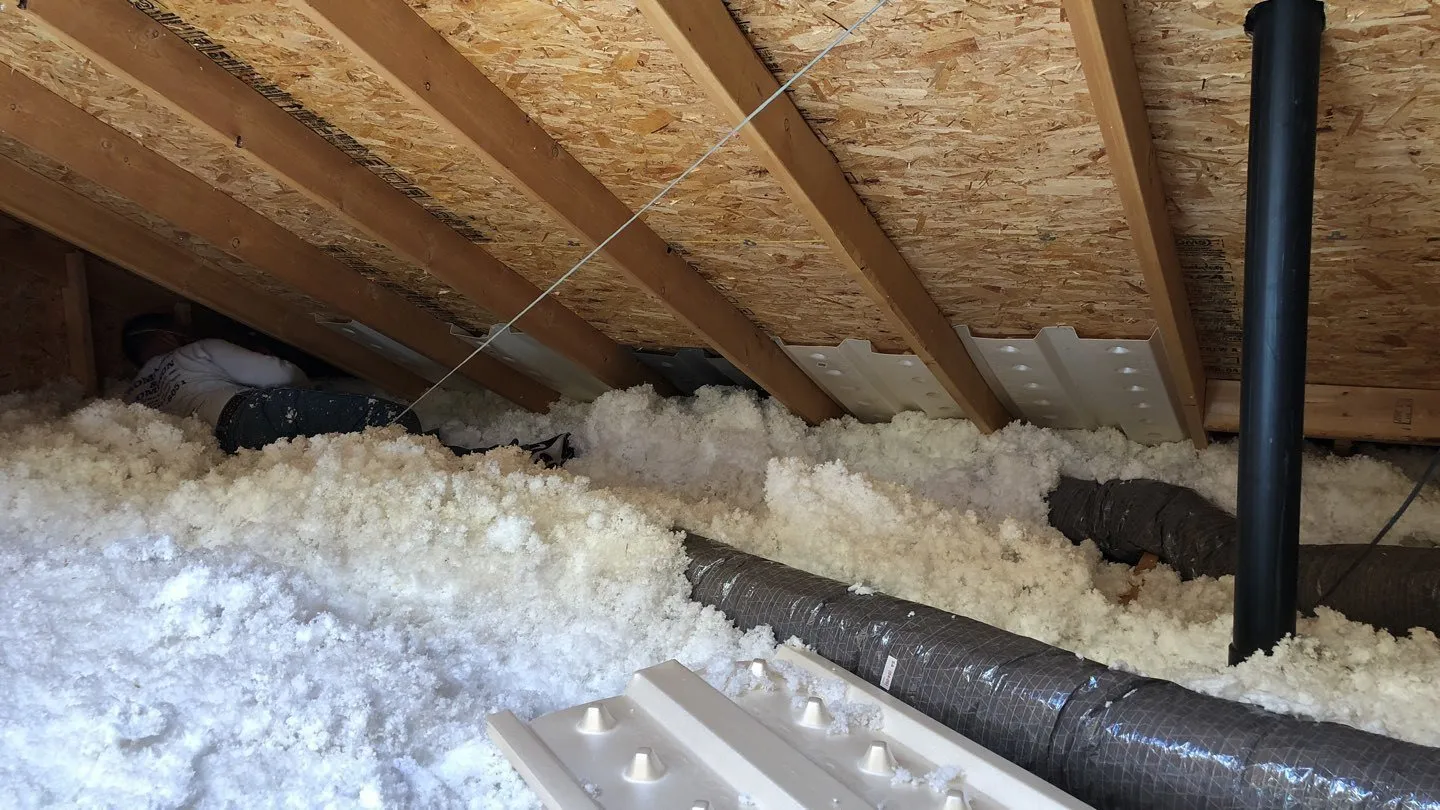
Blown-in fiberglass insulation is a common option because it can fill gaps around framing, wiring, and other attic obstructions more evenly than some batt installations.
The right solution depends on the condition of the existing insulation, the attic layout, and the home’s overall performance.
Frequently Asked Questions
How do I know if my attic has enough insulation?
An inspection is the best way to determine whether existing depth, coverage, and condition are adequate.
Will adding insulation lower my energy bills?
Improved insulation may reduce heat transfer and help the HVAC system operate more efficiently. Results vary based on the home’s current condition.
Can attic insulation improve comfort?
Yes. Proper insulation can help reduce hot and cold spots and maintain steadier indoor temperatures.
Do I need new insulation when replacing my roof?
Not always, but roof replacement is a useful time to evaluate attic insulation and ventilation together.
Improve Your Home’s Comfort from the Top Down
If your home struggles to stay comfortable or energy bills keep climbing, the attic may be part of the problem.
Thompson & Thompson can evaluate attic insulation, discuss available options, and recommend improvements that work with the roofing and ventilation systems.