Your roof protects everything beneath it, but because it is out of sight, small problems can go unnoticed until they become much larger.
Recognizing warning signs early can help you schedule repairs before a minor issue becomes an expensive project.
1. Missing or Damaged Shingles
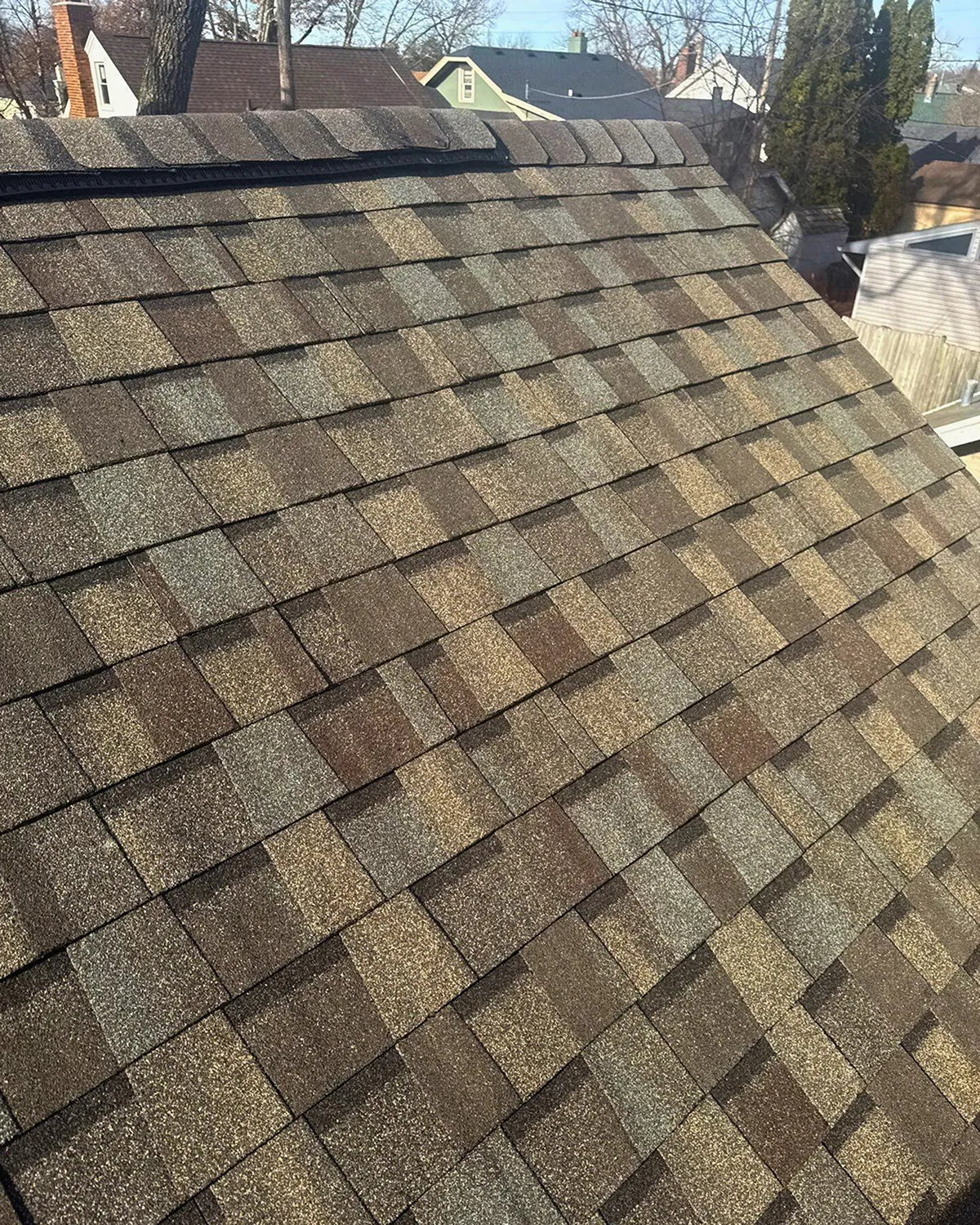
After wind or severe weather, shingles may be lifted, cracked, curled, torn, or completely missing.
Even a small exposed area can allow water to reach the layers beneath.
2. Water Stains on Ceilings or Walls
A roof leak does not always create active dripping.
The first sign may be a faint stain, peeling paint, or discoloration around a ceiling corner or light fixture.
3. Granules Collecting in Gutters
Some granule loss is normal as asphalt shingles age.
Large amounts in gutters or near downspouts may indicate aging materials or storm damage.
4. Flashing Looks Loose or Damaged
Flashing creates watertight transitions around chimneys, skylights, walls, vents, and roof intersections.
Loose, bent, rusted, or separated flashing can allow water into the home.
5. The Roof Is Sagging
A roof should maintain consistent lines.
Areas that dip or sag may indicate moisture damage or structural issues and should be inspected promptly.
6. Moss, Algae, or Debris Is Building Up
Heavy moss, algae, or debris may trap moisture and interfere with drainage.
7. Energy Bills Have Increased
The roof, insulation, and ventilation work together to regulate indoor temperatures.
Changes in attic performance can contribute to higher heating and cooling costs.
8. A Recent Storm Passed Through
Hail and wind can leave damage that is difficult to see from the ground.
A post-storm inspection can identify lifted shingles, hail impacts, damaged flashing, gutter damage, and other hidden concerns.
Repair or Replacement?
Not every roofing problem requires a new roof.
Isolated wind damage, flashing issues, and small leaks may be repairable when caught early.
The right recommendation depends on roof age, overall condition, and the extent of damage.
Frequently Asked Questions
How often should my roof be inspected?
Every few years and after major storms is a useful general guideline. Older roofs may require more frequent review.
Can a roof leak without missing shingles?
Yes. Flashing, sealants, valleys, vents, and other components can leak even when shingles appear intact.
Should I climb onto the roof myself?
Ground-level observation or a professional inspection is safer. Walking on a roof can be dangerous and may cause damage.
How quickly should repairs be completed?
It is best not to delay. Small problems often become larger when exposed to additional weather.
Do Not Wait for a Small Problem to Become a Major Repair
Thompson & Thompson can inspect the roof, explain the findings, and recommend repair or replacement based on the home’s actual condition.